How to Use the Emergency Lane Keeping (ELK)
Lane-keep Assist System (LAS)
The LAS operates
The LAS operates to assist the steering wheel operation when all the following conditions are met and the system detects that your vehicle may be deviating from its lane.
-
The vehicle speed is about 50 km/h (31 mph) or faster.
The system may operate at a vehicle speed of about 40 km/h (25 mph) or faster depending on the driver's condition.
-
The system detects white (yellow) lane lines.
While the steering wheel operation assist is operating, the screen display notifies the driver.
Instrument cluster (i-ACTIVSENSE display)
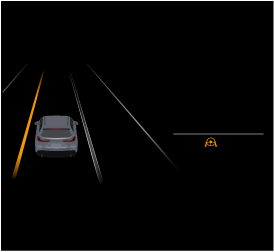
Instrument cluster (Other than i-ACTIVSENSE display)
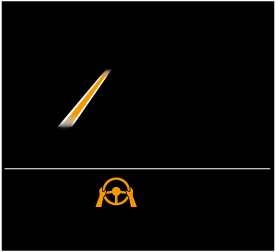
Active driving display
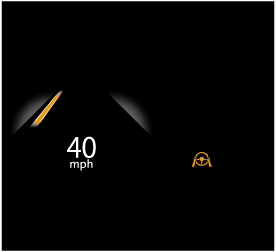
The LAS operates only on the side that detects white lines (yellow lines).
The forward camera may not be able to detect target objects correctly, and the LAS may not operate normally.
Refer to Forward Camera (Search).
If the driver operates the steering wheel while the steering wheel operation assist is operating, the steering wheel operation assist is canceled.
If it is determined that the driver has intentionally departed from its lane, the LAS function may not operate.
The LAS function may operate earlier depending on the driver's condition.


LAS temporary cancellation
If any of the following conditions is met, the LAS is temporarily canceled. The LAS operation is automatically restored when the system's operation conditions are met.
-
The turn signal lever is operated.
-
The steering wheel is operated abruptly.
-
The accelerator pedal is depressed abruptly.
-
The brake pedal is depressed.
-
The vehicle is driven on roads with narrow lanes.
-
The vehicle is making a sharp turn.
-
The TCS/DSC is operating.
-
The TCS/DSC is turned off.
-
The Smart Brake Support (SBS) has operated.
Road Keep Assist
The Road Keep Assist operates
The Road Keep Assist operates to assist the steering wheel operation when all the following conditions are met and the system detects that your vehicle may be deviating from the road.
-
(If the target object is a structure such as a road curb or guardrail)
The vehicle speed is about 35 km/h (22 mph) or faster.
-
(If the target object is not a structure such as a road curb or guardrail)
The vehicle speed is about 50 km/h (31 mph) or faster.
The system may operate at a vehicle speed of about 40 km/h (25 mph) or faster depending on the driver's condition.
-
The function recognizes the outside of the road by detecting target objects (such as gravel, grass, road curbs, guardrails, or walls).
While the steering wheel operation assist is operating, the steering assist indicator light (amber)  turns on, and a warning sound and steering wheel vibration notify the driver.
When the system detects target objects on one side only, the system does not operate to avoid a road departure in the direction of the side that is not being detected.
The forward camera may not be able to detect target objects correctly, and the LAS may not operate normally.
Refer to Forward Camera (Search).
If the driver operates the steering wheel while the steering wheel operation assist is operating, the steering wheel operation assist is canceled.
If it is determined that the driver has intentionally departed from its lane, the Road Keep Assist may not operate.
The Road Keep Assist may operate earlier depending on the driver's condition.
When the Road Keep Assist is temporarily canceled
The Road Keep Assist goes on stand-by when any of the following conditions is met. The Road Keep Assist is automatically restored when its operation conditions are met.
-
The turn signal lever is operated.
-
The accelerator pedal is depressed abruptly.
-
The brake pedal is depressed.
-
The steering wheel is operated abruptly.
-
The vehicle is driven on roads with narrow lanes.
-
The vehicle is making a sharp turn.
-
The TCS/DSC is operating.
-
The TCS/DSC is turned off.
-
The Smart Brake Support (SBS) has operated.
Blind Spot Assist
The Blind Spot Assist operates
The Blind Spot Assist operates to assist the steering wheel operation when all of the following conditions are met and the system determines that your vehicle may collide with a vehicle from a rear side.
-
The vehicle speed is about 40 km/h (25 mph) or faster.
-
The vehicle is driven on a straight road or gentle curve.
-
The system detects white (yellow) lane lines or the outside of the road (such as grass or gravel).
While the steering wheel operation assist is operating, the screen display, warning sound, and steering wheel vibration notify the driver.
Instrument cluster (i-ACTIVSENSE display)
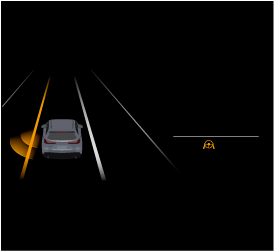
Instrument cluster (Other than i-ACTIVSENSE display)

Active driving display
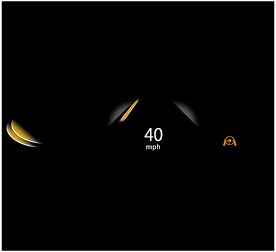
The Blind Spot Assist only operates on the side where white (yellow) lane lines or the outside of the road (such as grass or gravel) are detected.
The Blind Spot Assist may not operate normally when any of the following conditions is met.
-
The forward camera cannot detect target objects correctly.
Refer to Forward Camera (Search).
-
The rear side radar sensors cannot detect target objects correctly.
Refer to Radar Sensors (Search).
-
The vehicle is driven on a section with a closed lane or temporary lane due to construction.
-
The vehicle is driven on a forked road or junction.
If the driver operates the steering wheel while the steering wheel operation assist is operating, the steering wheel operation assist is canceled.
If it is determined that the driver has intentionally departed from its lane, the Blind Spot Assist may not operate.
When the Blind Spot Assist is temporarily canceled
The Blind Spot Assist goes on stand-by when any of the following conditions is met. The Blind Spot Assist is automatically restored when its operation conditions are met.
-
The accelerator pedal is depressed abruptly.
-
The brake pedal is depressed.
-
The steering wheel is operated abruptly.
-
The vehicle is driven on roads with narrow lanes.
-
The vehicle is making a sharp turn.
-
The TCS/DSC is operating.
-
The TCS/DSC is turned off.
-
The Smart Brake Support (SBS) has operated.
Head-on traffic avoidance assist
The Head-on traffic avoidance assist operates
When all the following conditions are met, the Head-on traffic avoidance assist operates to assist the steering wheel operation.
-
The vehicle speed is about 40 km/h (25 mph) or faster.
-
The vehicle is driven on a straight road or gentle curve.
-
The system detects white (yellow) lane lines or the outside of the road (such as grass or gravel).
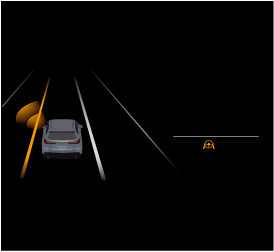
While the steering wheel operation assist is operating, the screen display, warning sound, and steering wheel vibration notify the driver.
Instrument cluster (i-ACTIVSENSE display)
Instrument cluster (Other than i-ACTIVSENSE display)
Active driving display
The Head-on traffic avoidance assist only operates on the side where white (yellow) lane lines or the outside of the road (such as grass or gravel) are detected.
The Head-on traffic avoidance assist may not operate normally when any of the following conditions is met.
-
The forward camera cannot detect target objects.
Refer to Forward Camera (Search).
-
The front radar sensor cannot detect target objects.
Refer to Radar Sensors (Search).
-
The vehicle is driven on a section with a closed lane or temporary lane due to construction.
-
The vehicle is driven on a forked road or junction.
If the driver operates the steering wheel while the steering wheel operation assist is operating, the steering wheel operation assist is canceled.
If it is determined that the driver has intentionally departed from its lane, the Head-on traffic avoidance assist may not operate.
When the Head-on traffic avoidance assist is temporarily canceled
The Head-on traffic avoidance assist goes on stand-by when any of the following conditions is met. The Head-on traffic avoidance assist is automatically restored when its operation conditions are met.
-
The accelerator pedal is depressed abruptly.
-
The brake pedal is depressed.
-
The steering wheel is operated abruptly.
-
The vehicle is driven on roads with narrow lanes.
-
The vehicle is making a sharp turn.
-
The TCS/DSC is operating.
-
The TCS/DSC is turned off.
-
The Smart Brake Support (SBS) has operated.
Changing the ELK warning type
The ELK warning type can be changed using Mazda Connect.
Tap  displayed on the navigation bar of the center display to set, or consult an Authorized Mazda Dealer.
The ELK warning type is linked to the LDWS warning type. If the ELK warning type is changed, the LDWS warning type is also changed.
Turning off the warning sound
There are 2 ways to turn off the warning sound while the ELK is operating.
-
Turn off the warning sound using Mazda Connect.
Tap
displayed on the navigation bar of the center display to set, or consult an Authorized Mazda Dealer. -
Turn off the warning sound using the i-ACTIVSENSE mute switch.
Refer to How to Use the i-ACTIVSENSE mute switch (Search).
Turning off the ELK
There are 2 ways to turn off the ELK.
-
Tap
 displayed on the navigation bar of the center display and tap
  →
→  . indicator light turns off.
 -
Tap
displayed on the navigation bar of the center display to set, or consult an Authorized Mazda Dealer.
When any of the Road Keep Assist, Blind Spot Assist, or Head-on traffic avoidance assist is turned off, the ELK OFF indicator light  turns on.
When the LAS is turned off, the LAS & LDWS OFF indicator  turns on.